


🌧️ Best Ways to Ensure Your Premises & Facilities Don’t Get Flooded During Heavy Rainfall
By Peter Davies | Premises & Facilities Management
Heavy rainfall is becoming more frequent across the UK, and for schools, commercial buildings, and public facilities, flooding isn’t just an inconvenience — it’s a serious operational, financial, and safety risk.
From damaged flooring to electrical hazards and business disruption, even minor water ingress can escalate quickly if buildings aren’t prepared.
The good news? Most flooding risks can be reduced through proactive premises management and practical planning.
Here are some of the most effective strategies estates and facilities teams can implement.
⸻
🏗️ 1. Keep Drainage Systems Clear and Maintained
Blocked gutters, downpipes, and surface drains are one of the most common causes of internal flooding.
What to check regularly:
• Gutters free from leaves and debris
• Downpipes flowing properly during rain
• External drains not covered by soil or landscaping
• Inspection chambers clear and accessible
👉 In education settings especially, autumn leaf fall followed by winter rain is a high-risk period.
⸻
🌿 2. Manage External Grounds and Water Flow
Grounds maintenance plays a bigger role in flood prevention than many realise.
Simple steps include:
• Ensuring surfaces slope away from buildings
• Keeping grassed areas from compacting and pooling water
• Checking that fencing or storage doesn’t block drainage routes
• Maintaining soakaways and permeable surfaces
Facilities teams who work closely with grounds contractors often spot risks early.
⸻
🚪 3. Protect Vulnerable Entry Points
Doors, loading bays, and low-level windows are frequent water ingress points.
Consider:
• Door seals and thresholds in good condition
• External drains directly outside entrances
• Temporary flood barriers or sandbags in known risk areas
• Weather-resistant matting systems to reduce water tracking inside
For older school buildings, legacy design layouts may require creative solutions.
⸻
⚡ 4. Safeguard Plant Rooms and Electrical Infrastructure
Plant rooms, boiler rooms, and electrical cupboards located at ground or basement level need extra protection.
Best practice includes:
• Raised storage for equipment where possible
• Water leak detection systems
• Regular checks of sump pumps or drainage pumps
• Clear emergency shutdown procedures for site teams
Floodwater and electrics never mix — prevention here is critical.
⸻
🧰 5. Implement a Proactive Maintenance Schedule
Flood prevention isn’t a one-off task; it’s part of structured estates management.
Include checks in your PPM schedule such as:
• Seasonal gutter inspections
• Roof surveys after storms
• Drain jetting or cleaning where needed
• Checking expansion joints and roof flashing
Many issues that cause flooding start as small maintenance defects months earlier.
⸻
📋 6. Create a Clear Flood Response Plan
Even the best-managed buildings can face extreme weather events. Prepared teams respond faster and reduce damage.
Your plan should include:
• Named responsible persons or keyholders
• Emergency contact lists
• Isolation procedures for electrics or water
• Locations of wet vacs, barriers, or absorbent kits
• Communication protocols for staff or hirers
For multi-use school sites — something I see often — clarity around who responds out-of-hours is essential.
⸻
👷 7. Train Your Premises & Facilities Team
Your frontline staff are your first defence.
Encourage them to:
• Report early signs of leaks or pooling
• Monitor vulnerable areas during storms
• Understand drainage layouts across the site
Experienced premises assistants often notice issues long before they become major incidents.
⸻
💡 Final Thoughts
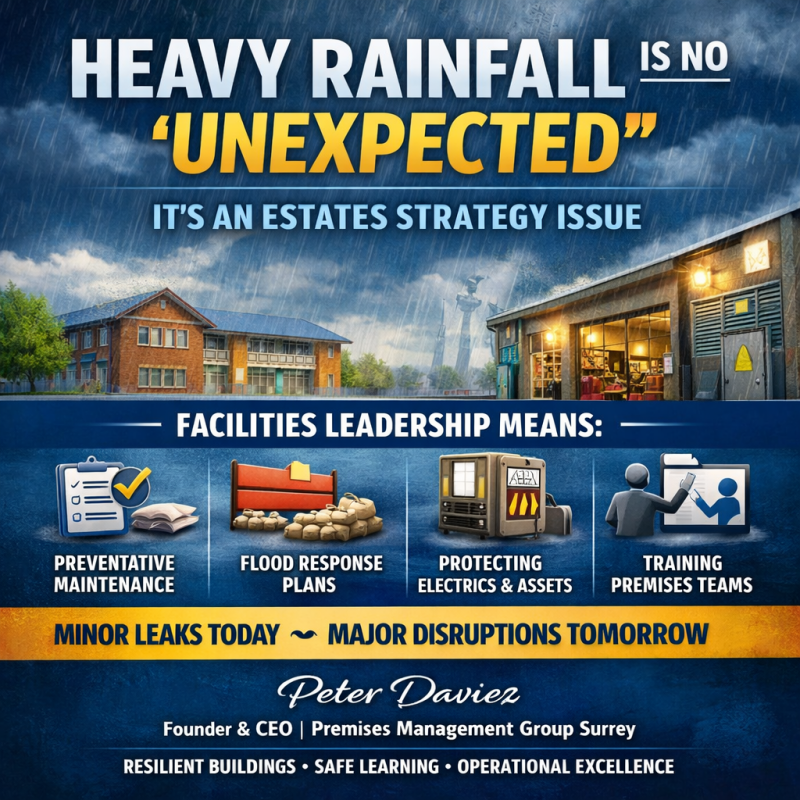
Flood prevention isn’t about reacting to storms — it’s about building resilience into everyday facilities management.
When estates teams stay proactive:
✔ Buildings stay operational
✔ Repair costs reduce
✔ Health & safety risks drop
✔ Learning and business continuity remain protected
In many ways, successful flood prevention is invisible work — but it’s some of the most important work we do in the built environment.
Add comment
Comments