

I recently visited a large supermarket in my local area and was genuinely concerned to see a fire exit apparently blocked, with a metal shutter padlocked and chained while the premises were occupied.
In the UK, fire exits should never be obstructed or secured in a way that prevents immediate emergency escape when a building is occupied.
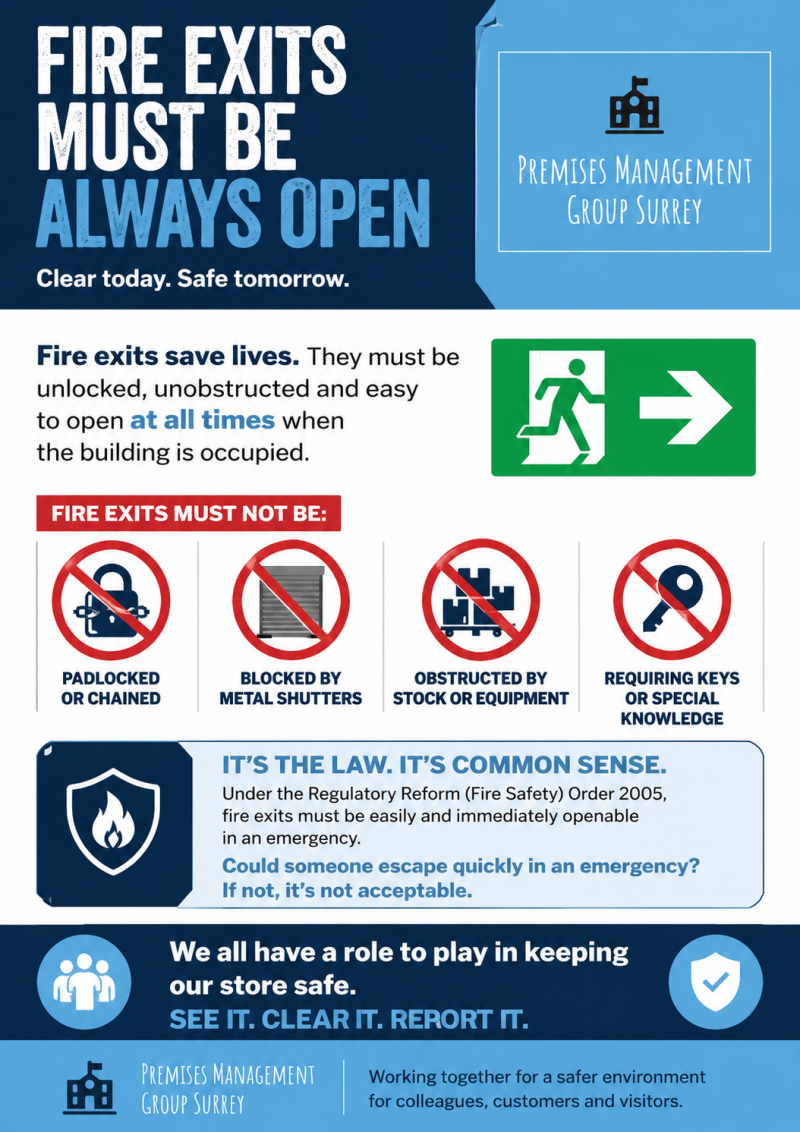
Under the Regulatory Reform (Fire Safety) Order 2005, emergency exits must:
• Be easily and immediately openable in an emergency
• Allow people to escape quickly and safely
• Not require a key, code, or special knowledge to open
• Remain unobstructed and available whenever the building is occupied
Examples of poor practice can include:
🔒 Padlocks and chains on fire exits
🚫 Escape routes blocked by stock or equipment
🛑 Metal shutters preventing immediate escape
🔑 Exits requiring staff assistance or keys during evacuation
While some security shutters may form part of a fire strategy, they must:
• Fail-safe open during a fire alarm or power failure
• Have emergency override/manual release systems
• Never prevent immediate escape
• Be fully integrated into the building’s fire safety arrangements
A simple question to ask is:
“Could a member of the public unfamiliar with the building escape immediately during smoke, panic, or darkness?”
If the answer is no, there may be a serious safety concern.
Blocked exits can:
• Delay evacuation
• Increase risks of injury or crowd crushing
• Lead to enforcement action or prosecution
• Put lives at risk during a fire or emergency
Fire exits save lives. Security should never compromise emergency escape.
#FireSafety #FacilityManagement #HealthAndSafety #EmergencyExit #PremisesManagement #PMGS #FireRiskAssessment #SafetyFirst
Add comment
Comments