

Published By - Peter Davies
☀️ PMGS Summer Holiday Planning Guide
10 Essential Ways to Prepare Your School Premises for the Summer Break
The summer holiday period is often the most important time of the year for premises and facilities teams.
Whilst pupils and staff enjoy a well-earned break, estates and facilities professionals have a valuable opportunity to undertake essential maintenance, compliance activities, cleaning programmes, and improvement projects that are difficult to complete during term time.
A well-organised summer programme can make the difference between a smooth start to the new academic year and a September filled with reactive issues, unexpected repairs, and operational challenges.
At Premises Management Group Surrey (PMGS), we believe that preparation, planning, and proactive management are the foundations of successful premises operations.
Here are ten key areas every school, academy, trust, and educational facility should consider when planning for the summer holiday period.
1. Develop a Comprehensive Summer Works Programme
Before the holidays begin, create a detailed schedule of all planned works and activities.
This should include:
- Planned preventative maintenance
- Deep cleaning programmes
- Compliance inspections
- Contractor works
- Grounds maintenance
- Building improvement projects
Assign responsibilities, establish deadlines, and monitor progress throughout the holiday period to ensure all tasks remain on track.
2. Undertake a Full Site Condition Survey
The summer break provides the perfect opportunity to inspect your site thoroughly.
Review:
- Buildings and internal spaces
- Roofing systems
- Drainage infrastructure
- Playgrounds
- Sports facilities
- External areas and boundaries
Identifying defects early allows schools to prioritise repairs before issues escalate into more significant and costly problems.
3. Schedule Deep Cleaning Programmes
Deep cleaning should be a key priority during the summer period.
Areas to consider include:
- Classrooms
- Offices
- Staff rooms
- Kitchens
- Toilet facilities
- Sports halls
- Carpets and flooring
- Gymnastics and sports equipment
A comprehensive cleaning programme helps create a healthier environment while presenting the school at its very best for the new academic year.
4. Review Statutory Compliance Requirements
Summer is an excellent time to verify that all statutory inspections and compliance obligations are up to date.
This may include:
- Fire alarm servicing
- Emergency lighting inspections
- Fire extinguisher maintenance
- Water hygiene monitoring
- Electrical testing
- Gas safety inspections
- Access equipment inspections
Maintaining an accurate compliance tracker can help ensure no critical inspections are overlooked.
5. Coordinate Contractors Effectively
Many schools rely on contractors during the summer break to complete projects and maintenance activities.
Ensure every contractor receives:
- Site-specific rules
- Safeguarding guidance
- Emergency procedures
- Access arrangements
- Permit-to-work requirements
Effective contractor management helps maintain safety, reduce delays, and ensure projects are completed efficiently.
6. Organise Stores, Workshops and Maintenance Areas
Summer presents a valuable opportunity to improve organisation across storage and maintenance facilities.
Consider:
- Removing obsolete stock
- Reviewing spare parts inventories
- Organising cleaning cupboards
- Updating key registers
- Inspecting emergency equipment
- Reviewing asset storage arrangements
An organised workspace improves productivity and supports effective facilities management throughout the year.
7. Review Site Security Arrangements
Schools can become more vulnerable during periods of reduced occupancy.
Before the holiday period begins, review:
- Intruder alarms
- CCTV systems
- External lighting
- Perimeter fencing
- Access control systems
- Key-holder arrangements
- Emergency contact information
- Lone working procedures
A robust security strategy protects both the site and its assets during holiday periods.
8. Prepare Grounds and External Areas
The condition of external areas often creates the first impression visitors receive when returning in September.
Summer grounds maintenance should include:
- Grass cutting
- Weed control
- Tree inspections
- Drain clearance
- Playground inspections
- Sports pitch maintenance
- Line marking
Well-maintained grounds contribute significantly to the overall appearance and safety of the site.
9. Update Documentation and Operational Records
The summer break is an ideal opportunity to review and update critical documentation.
This may include:
- Risk assessments
- Fire evacuation procedures
- Site plans
- Asset registers
- Contractor records
- Training records
- Health and safety documentation
Accurate records support compliance, operational efficiency, and effective decision-making.
10. Plan for a Successful September Reopening
Preparation for reopening should begin long before staff return.
Develop a reopening checklist covering:
✅ Classroom readiness
✅ Furniture arrangements
✅ Heating and ventilation systems
✅ ICT equipment and power supplies
✅ Updated signage
✅ Fire safety systems
✅ Staff access arrangements
A structured reopening plan helps ensure a smooth transition into the new academic year.
The PMGS Summer Holiday Principle
“Failing to plan during the summer break often means planning to react in September.”
Successful summer programmes are built around seven core principles:
🔹 Planning
🔹 Compliance
🔹 Maintenance
🔹 Cleaning
🔹 Organisation
🔹 Communication
🔹 Readiness
By investing time and effort into summer preparation, schools can create safer, cleaner, more efficient environments that support staff, pupils, hirers, and visitors from the very first day of the new academic year.
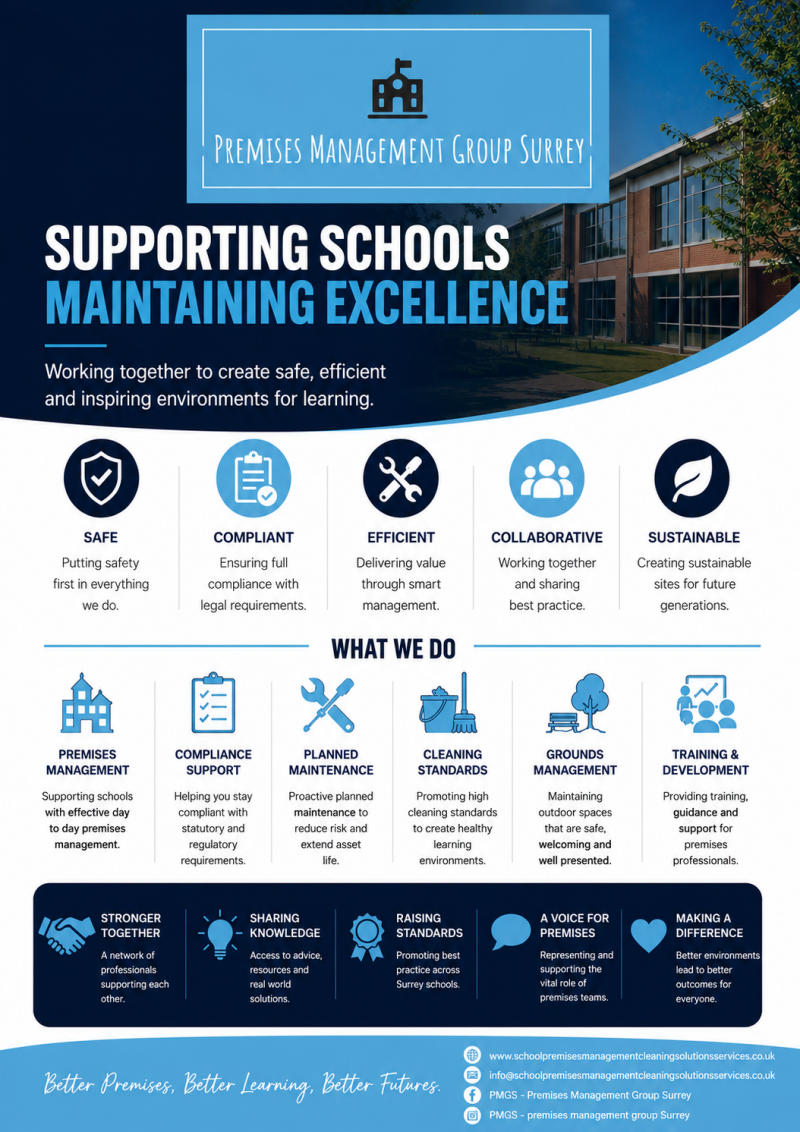
At Premises Management Group Surrey (PMGS), we understand that effective facilities management is about more than maintaining buildings — it is about creating environments where education can thrive.
Premises Management Group Surrey (PMGS)
Supporting Schools, Facilities and Estates Through Effective Premises Management.
Add comment
Comments