

🏢 PMGS Blog
By - Peter Davies
Understanding the Different Types of Maintenance in Premises Management
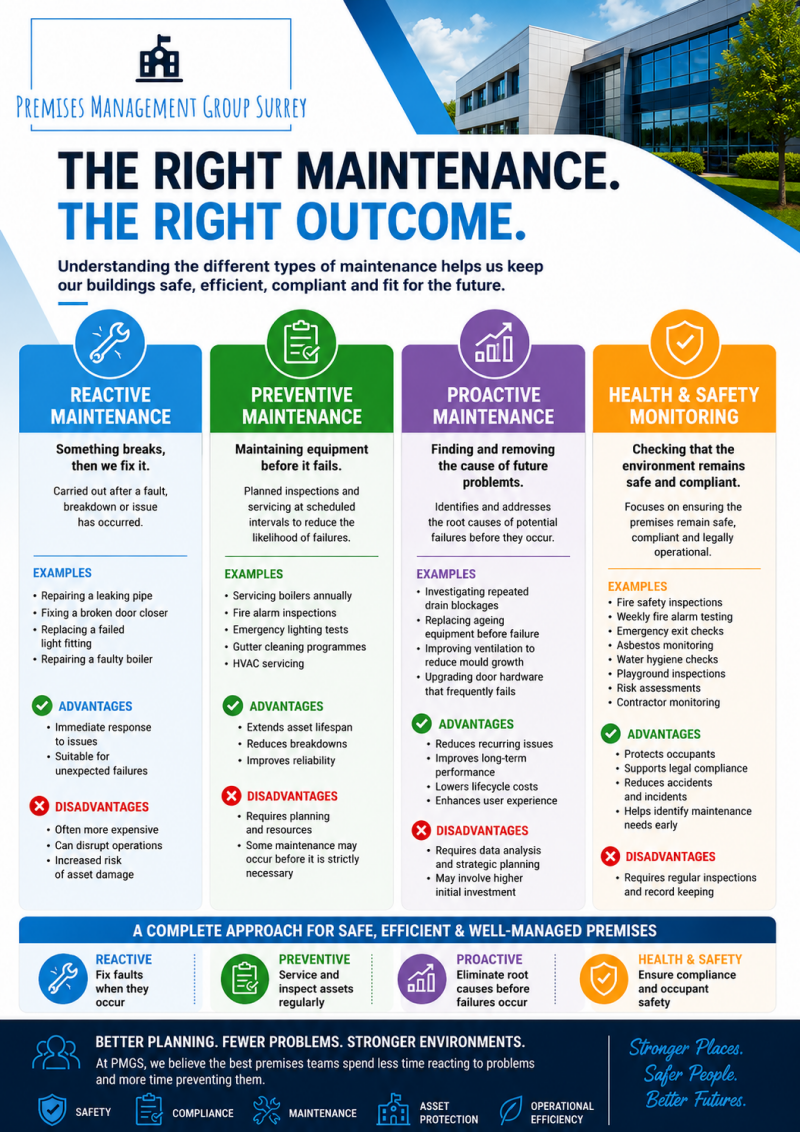
In premises and facilities management, maintenance is far more than simply fixing things when they break. A successful premises strategy combines Proactive, Reactive, Preventive, and Health & Safety Monitoring activities to keep buildings safe, compliant, efficient, and operational.
Let’s explore the differences.
⸻
🔧 Reactive Maintenance
What is it?
Reactive maintenance is carried out after a fault, breakdown, or issue has occurred.
Examples:
- Repairing a leaking pipe after it bursts
- Replacing a failed light fitting
- Fixing a broken door closer
- Repairing a faulty boiler
Advantages:
✅ Immediate response to issues
✅ Suitable for unexpected failures
Disadvantages:
❌ Often more expensive
❌ Can disrupt operations
❌ Increased risk of asset damage
Simple definition:
“Something breaks, then we fix it.”
⸻
📋 Preventive Maintenance
What is it?
Preventive maintenance involves carrying out planned inspections and servicing at scheduled intervals to reduce the likelihood of failures.
Examples:
- Servicing boilers annually
- Emergency lighting tests
- Fire alarm inspections
- Gutter cleaning programmes
- HVAC servicing
Advantages:
✅ Extends asset lifespan
✅ Reduces breakdowns
✅ Improves reliability
Disadvantages:
❌ Requires planning and resources
❌ Some maintenance may occur before it is strictly necessary
Simple definition:
“Maintaining equipment before it fails.”
⸻
🚀 Proactive Maintenance
What is it?
Proactive maintenance goes a step further by identifying and addressing the root causes of potential failures before they occur.
Examples:
- Investigating repeated drain blockages
- Replacing ageing equipment before failure
- Improving ventilation to reduce mould growth
- Upgrading door hardware that frequently fails
Advantages:
✅ Reduces recurring issues
✅ Improves long-term performance
✅ Lowers lifecycle costs
✅ Enhances user experience
Disadvantages:
❌ Requires data analysis and strategic planning
❌ May involve higher initial investment
Simple definition:
“Finding and removing the cause of future problems.”
⸻
🦺 Health & Safety Monitoring
What is it?
Health and Safety Monitoring focuses on ensuring the premises remain safe, compliant, and legally operational.
This is not always maintenance work itself, but it often identifies maintenance requirements.
Examples:
- Fire safety inspections
- Weekly fire alarm testing
- Emergency exit checks
- Asbestos monitoring
- Water hygiene checks
- Playground inspections
- Risk assessments
- Contractor monitoring
Advantages:
✅ Protects occupants
✅ Supports legal compliance
✅ Reduces accidents and incidents
✅ Helps identify maintenance needs early
Disadvantages:
❌ Requires regular inspections and record keeping
Simple definition:
“Checking that the environment remains safe and compliant.”
⸻
🎯 The PMGS Approach
The most effective premises management strategy combines all four:
Activity
Purpose
🔧 Reactive Maintenance
Fix faults when they occur
📋 Preventive Maintenance
Service and inspect assets regularly
🚀 Proactive Maintenance
Eliminate root causes before failures occur
🦺 Health & Safety Monitoring
Ensure compliance and occupant safety
Final Thought
At Premises Management Group Surrey (PMGS), we believe the best premises teams spend less time reacting to problems and more time preventing them.
A well-managed site balances:
✔ Safety
✔ Compliance
✔ Maintenance
✔ Asset Protection
✔ Operational Efficiency
Because successful premises management isn’t just about fixing buildings—it’s about creating safe, compliant, and sustainable environments where people can thrive.
PMGS – Supporting Schools, Facilities and Organisations Through Professional Premises Management. 🏢🔑🦺
#PMGS #PremisesManagement #FacilitiesManagement #PreventiveMaintenance #ProactiveMaintenance #ReactiveMaintenance #HealthAndSafety #SchoolEstates #Compliance #BuildingMaintenance #FacilitiesLeadership
Add comment
Comments