

Published By Peter Davies
🟠 PMGS Blog: Orange Weather Warning for High Temperatures – Keeping Yourself and Others Safe
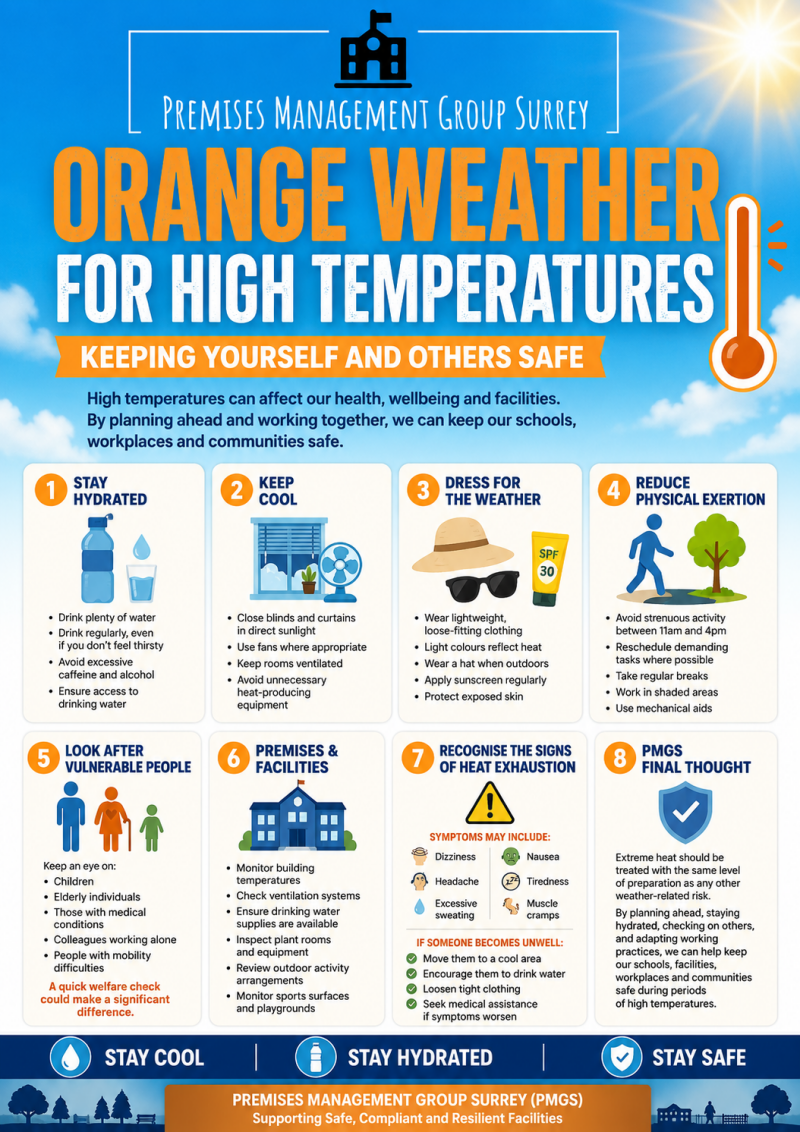
As temperatures rise and an Orange Weather Warning is issued, it is important that everyone takes sensible precautions to protect themselves, colleagues, students, visitors, and vulnerable members of the community.
At Premises Management Group Surrey (PMGS), we understand that extreme heat can impact health, wellbeing, productivity, and the safe operation of buildings and facilities.
☀️ What Does an Orange Heat Warning Mean?
An Orange Weather Warning indicates that:
✅ Significant impacts are likely
✅ Heat-related illnesses may increase
✅ Vulnerable people are at greater risk
✅ Buildings and infrastructure may be affected
✅ Outdoor activities may need additional precautions
⸻
💧 1. Stay Hydrated
One of the most important things you can do is drink plenty of water throughout the day.
✔ Drink regularly, even if you do not feel thirsty
✔ Avoid excessive caffeine and alcohol
✔ Encourage colleagues and visitors to stay hydrated
✔ Provide access to drinking water where possible
⸻
🌳 2. Keep Cool
Try to remain in shaded or cooler areas during the hottest part of the day.
✔ Close blinds and curtains in direct sunlight
✔ Use fans where appropriate
✔ Keep rooms ventilated
✔ Avoid unnecessary heat-producing equipment
⸻
👒 3. Dress for the Weather
Wear lightweight, loose-fitting clothing and suitable footwear.
✔ Light colours reflect heat
✔ Wear a hat when outdoors
✔ Apply sunscreen regularly
✔ Protect exposed skin
⸻
🚶 4. Reduce Physical Exertion
Avoid strenuous activity during peak temperatures, particularly between 11am and 4pm.
✔ Reschedule demanding tasks where possible
✔ Take regular breaks
✔ Work in shaded areas
✔ Use mechanical aids to reduce manual handling
⸻
❤️ 5. Look After Vulnerable People
Keep an eye on:
• Children
• Elderly individuals
• Those with medical conditions
• Colleagues working alone
• People with mobility difficulties
A quick welfare check could make a significant difference.
⸻
🏫 6. Premises & Facilities Considerations
Facilities teams should consider:
✔ Monitoring building temperatures
✔ Checking ventilation systems
✔ Ensuring drinking water supplies are available
✔ Inspecting plant rooms and equipment
✔ Reviewing outdoor activity arrangements
✔ Monitoring sports surfaces and playgrounds
⸻
🚨 7. Recognise the Signs of Heat Exhaustion
Symptoms may include:
• Dizziness
• Headache
• Excessive sweating
• Nausea
• Tiredness
• Muscle cramps
If someone becomes unwell:
➡ Move them to a cool area
➡ Encourage them to drink water
➡ Loosen tight clothing
➡ Seek medical assistance if symptoms worsen
⸻
💡 PMGS Final Thought
Extreme heat should be treated with the same level of preparation as any other weather-related risk.
By planning ahead, staying hydrated, checking on others, and adapting working practices, we can help keep our schools, facilities, workplaces, and communities safe during periods of high temperatures.
Stay Cool • Stay Hydrated • Stay Safe
Premises Management Group Surrey (PMGS)
Supporting Safe, Compliant and Resilient Facilities ☀️🏫💧
Add comment
Comments