

Published By Peter Davies
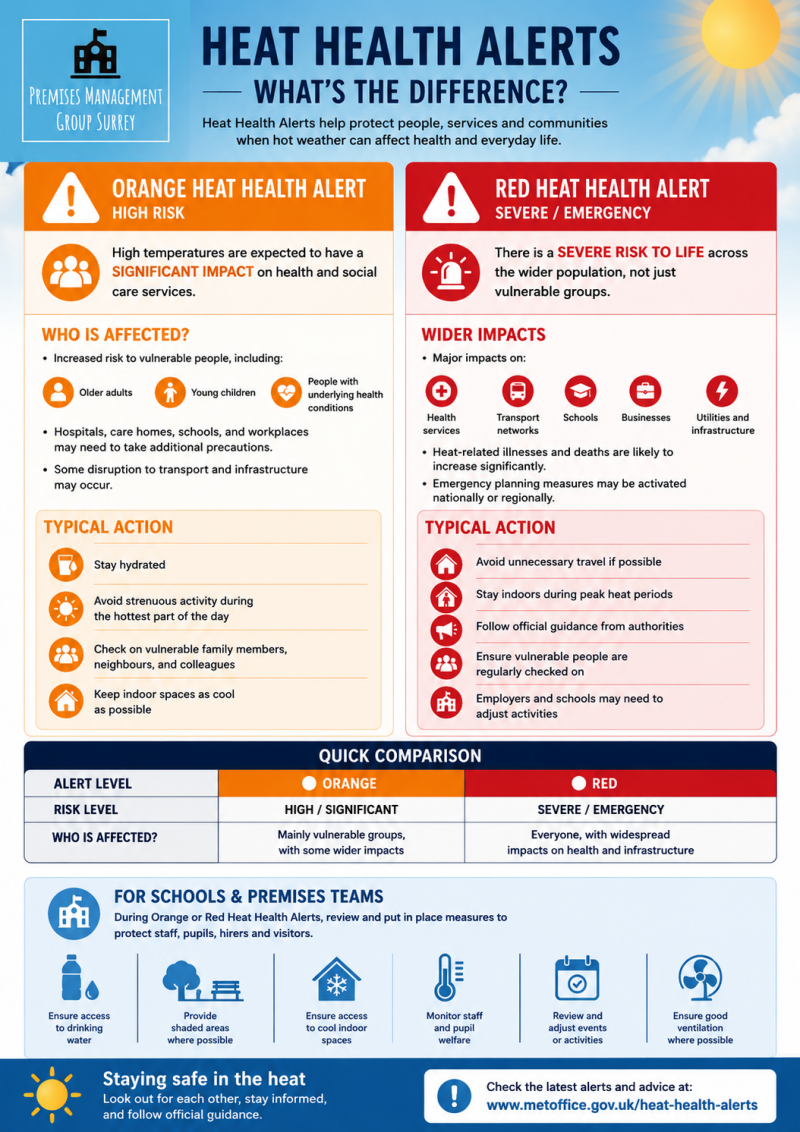
The difference between an Orange Heat Health Alert and a Red Heat Health Alert is the level of risk to people, infrastructure, and services.
🟠 Orange Heat Health Alert
An Orange Alert means:
- High temperatures are expected to have a significant impact on health and social care services.
- Increased risk to vulnerable people, including:
- Older adults
- Young children
- People with underlying health conditions
- Hospitals, care homes, schools, and workplaces may need to take additional precautions.
- Some disruption to transport and infrastructure may occur.
Typical Action:
✅ Stay hydrated
✅ Avoid strenuous activity during the hottest part of the day
✅ Check on vulnerable family members, neighbours, and colleagues
✅ Keep indoor spaces as cool as possible
⸻
🔴 Red Heat Health Alert
A Red Alert is the highest level and means:
- There is a severe risk to life across the wider population, not just vulnerable groups.
- Major impacts on:
- Health services
- Transport networks
- Schools
- Businesses
- Utilities and infrastructure
- Heat-related illnesses and deaths are likely to increase significantly.
- Emergency planning measures may be activated nationally or regionally.
Typical Action:
🚨 Avoid unnecessary travel if possible
🚨 Stay indoors during peak heat periods
🚨 Follow official guidance from authorities
🚨 Ensure vulnerable people are regularly checked on
🚨 Employers and schools may need to adjust activities
Quick Comparison
Alert Level
Risk Level
Who Is Affected?
🟠 Orange
Significant
Mainly vulnerable groups, with some wider impacts
🔴 Red
Severe / Emergency
Everyone, with widespread impacts on health and infrastructure
For schools and premises teams, a Red Alert may require reviewing outdoor activities, ensuring adequate ventilation, monitoring staff welfare, increasing water availability, and considering adjustments to events or sports activities.
☀️ As temperatures rise, PMGS would recommend ensuring all staff, pupils, hirers, and visitors have access to drinking water, shaded areas, and cool indoor spaces wherever possible.
Add comment
Comments