

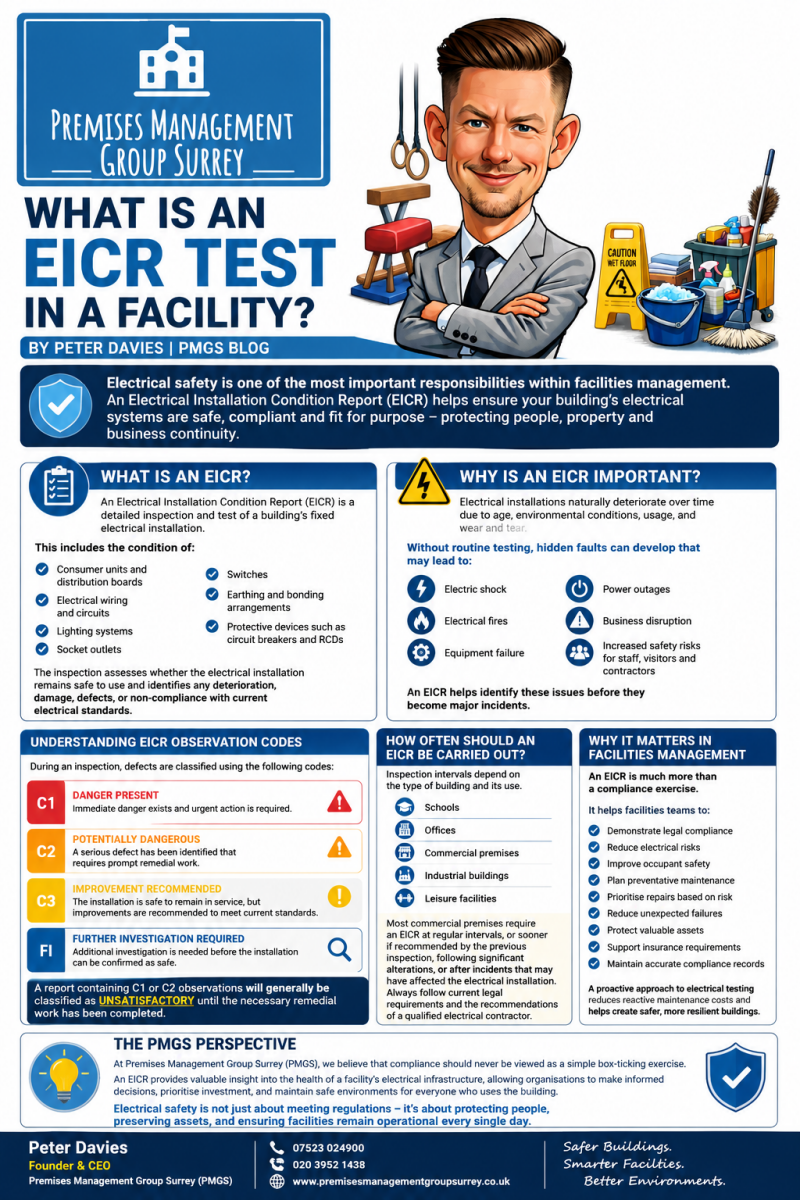
What is an EICR Test in a Facility?
By Peter Davies | Premises Management Group Surrey (PMGS)
Electrical safety is one of the most important responsibilities within facilities management. Whether you’re responsible for a school, office, leisure centre, healthcare facility, or commercial building, ensuring that your electrical installation is safe is essential for protecting people, property, and business continuity.
One of the most effective ways to achieve this is through an Electrical Installation Condition Report (EICR).
What is an EICR?
An Electrical Installation Condition Report (EICR) is a detailed inspection and test of a building’s fixed electrical installation.
This includes the condition of:
- Consumer units and distribution boards
- Electrical wiring and circuits
- Lighting systems
- Socket outlets
- Switches
- Earthing and bonding arrangements
- Protective devices such as circuit breakers and RCDs
The inspection assesses whether the electrical installation remains safe to use and identifies any deterioration, damage, defects, or non-compliance with current electrical standards.
Why is an EICR Important?
Electrical installations naturally deteriorate over time due to age, environmental conditions, usage, and wear and tear.
Without routine testing, hidden faults can develop that may lead to:
- Electric shock
- Electrical fires
- Equipment failure
- Power outages
- Business disruption
- Increased safety risks for staff, visitors, and contractors
An EICR helps identify these issues before they become major incidents.
Understanding EICR Observation Codes
During an inspection, defects are classified using the following codes:
C1 – Danger Present
Immediate danger exists and urgent action is required.
C2 – Potentially Dangerous
A serious defect has been identified that requires prompt remedial work.
C3 – Improvement Recommended
The installation is safe to remain in service, but improvements are recommended to meet current standards.
FI – Further Investigation Required
Additional investigation is needed before the installation can be confirmed as safe.
A report containing C1 or C2 observations will generally be classified as Unsatisfactory until the necessary remedial work has been completed.
How Often Should an EICR Be Carried Out?
Inspection intervals depend on the type of building and its use.
Typical guidance includes:
- Schools
- Offices
- Commercial premises
- Industrial buildings
- Leisure facilities
Most commercial premises require an EICR at regular intervals, or sooner if recommended by the previous inspection, following significant alterations, or after incidents that may have affected the electrical installation.
Always follow current legal requirements and the recommendations of a qualified electrical contractor.
Why It Matters in Facilities Management
From a facilities management perspective, an EICR is much more than a compliance exercise.
It helps facilities teams to:
- Demonstrate legal compliance
- Reduce electrical risks
- Improve occupant safety
- Plan preventative maintenance
- Prioritise repairs based on risk
- Reduce unexpected failures
- Protect valuable assets
- Support insurance requirements
- Maintain accurate compliance records
A proactive approach to electrical testing reduces reactive maintenance costs and helps create safer, more resilient buildings.
The PMGS Perspective
At Premises Management Group Surrey (PMGS), we believe that compliance should never be viewed as a simple box-ticking exercise.
An EICR provides valuable insight into the health of a facility’s electrical infrastructure, allowing organisations to make informed decisions, prioritise investment, and maintain safe environments for everyone who uses the building.
Electrical safety is not just about meeting regulations—it’s about protecting people, preserving assets, and ensuring facilities remain operational every single day.
Peter Davies
Founder & CEO
Premises Management Group Surrey (PMGS)
“Safer Buildings. Smarter Facilities. Better Environments.”
Add comment
Comments