

Understanding the Differences in Cleaning Services
The main difference between domestic, commercial, and institutional cleaning is the type of premises, scale of work, cleaning standards, risk level, and operational requirements.
Area
- 🏠 Domestic Cleaning
- 🏢 Commercial Cleaning
- 🏫 Institutional Cleaning
Where:
- Homes, flats, apartments
- Offices, shops, gyms, warehouses, businesses
- Schools, colleges, hospitals, care settings, public buildings
Main Purpose:
- Keep a home clean and comfortable
- Maintain a professional, hygienic workplace
- Maintain hygiene, safety, and operational standards in higher-responsibility environments
Scale:
- Usually small
- Small to very large
- Often large/complex sites
Cleaning Frequency:
- Weekly, fortnightly, or one-off
- Daily, nightly, weekly, or contracted
- Frequently daily with scheduled periodic/deep cleaning
Risk Level:
- Generally lower
- Moderate, depending on premises
- Often higher because of vulnerable users, safeguarding, infection risks, or public use
Equipment:
- Vacuum, mop, and general household equipment
- Commercial vacuums, scrubber dryers, carpet machines, specialist equipment
- Commercial/specialist equipment with controlled procedures
Chemicals:
- Household or professional products
- Professional/commercial chemicals
- Often tightly controlled products and procedures appropriate to the environment
Documentation:
- Usually relatively simple
- RAMS, COSHH, schedules, specifications, audits
- Often extensive RAMS, COSHH, training records, cleaning schedules, audits, and compliance records
Staff Management:
- Cleaner/customer relationship
- Supervisors, cleaning teams, and contract managers
- Structured teams working alongside facilities/premises management
Security:
- Access to private homes
- Keys, alarms, access control
- Often enhanced safeguarding, security, and restricted-area requirements
🏠 Domestic Cleaning
A domestic cleaning company primarily cleans people’s homes. Services might include vacuuming, dusting, bathrooms, kitchens, mopping, ironing, and occasional deep cleans. The emphasis is generally on cleanliness, presentation, and the individual customer’s requirements.
🏢 Commercial Cleaning
A commercial cleaning company works for businesses and organisations rather than individual households. This can include offices, retail premises, leisure facilities, warehouses, sports facilities, and communal areas. Commercial cleaners are more likely to work to a contract specification, agreed frequencies, and measurable standards.
For example, a commercial cleaning contract could specify that toilets are cleaned daily, offices vacuumed three times per week, carpets periodically extracted, and windows cleaned monthly.
🏫 Institutional Cleaning
Institutional cleaning is particularly relevant to environments such as schools, universities, healthcare facilities, care establishments, and other public-sector buildings. The difference isn’t simply that the buildings are bigger. Cleaning has to integrate with the organisation’s wider health & safety, safeguarding, infection-control, security, and facilities-management arrangements.
In a school, for example, you may have classrooms, SEN spaces, toilets, kitchens, offices, sports halls, and high-touch communal areas—all requiring different cleaning methods and frequencies. Contractors may also need DBS/safeguarding arrangements, controlled access, and procedures for working around children.
Where PMGS-style Services Would Sit
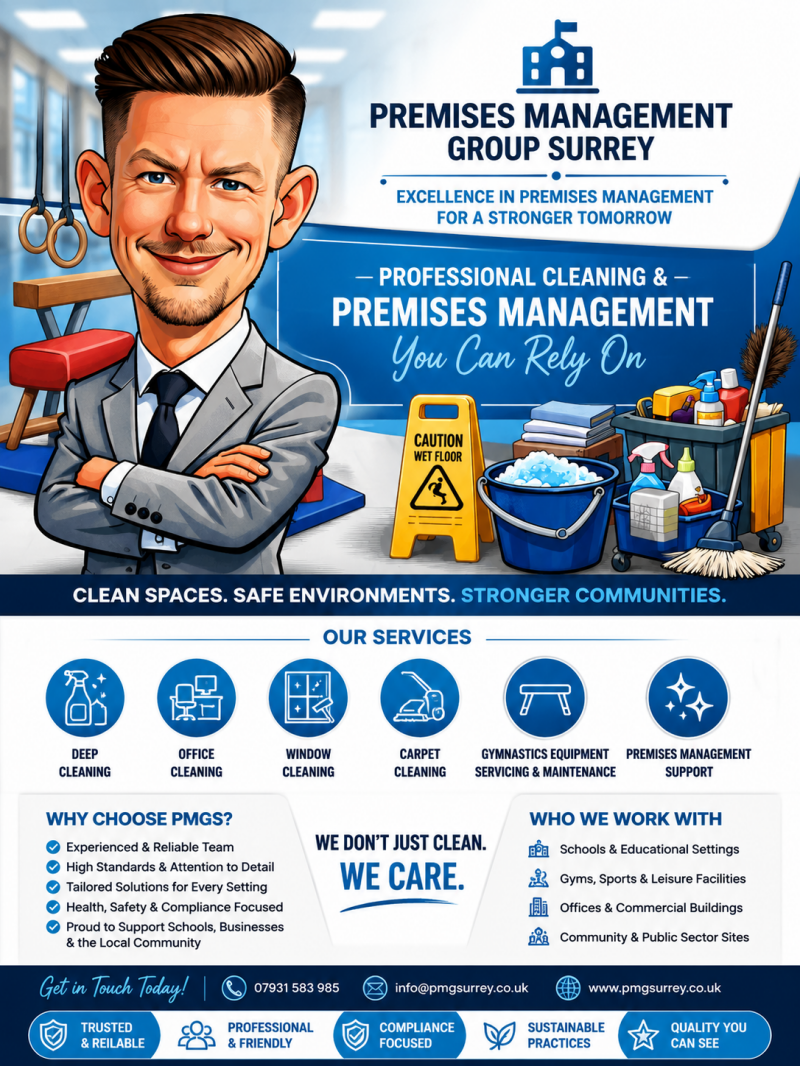
A business providing school cleaning, premises-management support, deep cleaning, carpet cleaning, and specialist gymnastics-equipment cleaning/maintenance would generally sit across commercial and institutional facilities services, rather than being described simply as a domestic cleaning company. A strong description for that type of operation would
Add comment
Comments